How Often Should You Test Pool Water in Arizona?
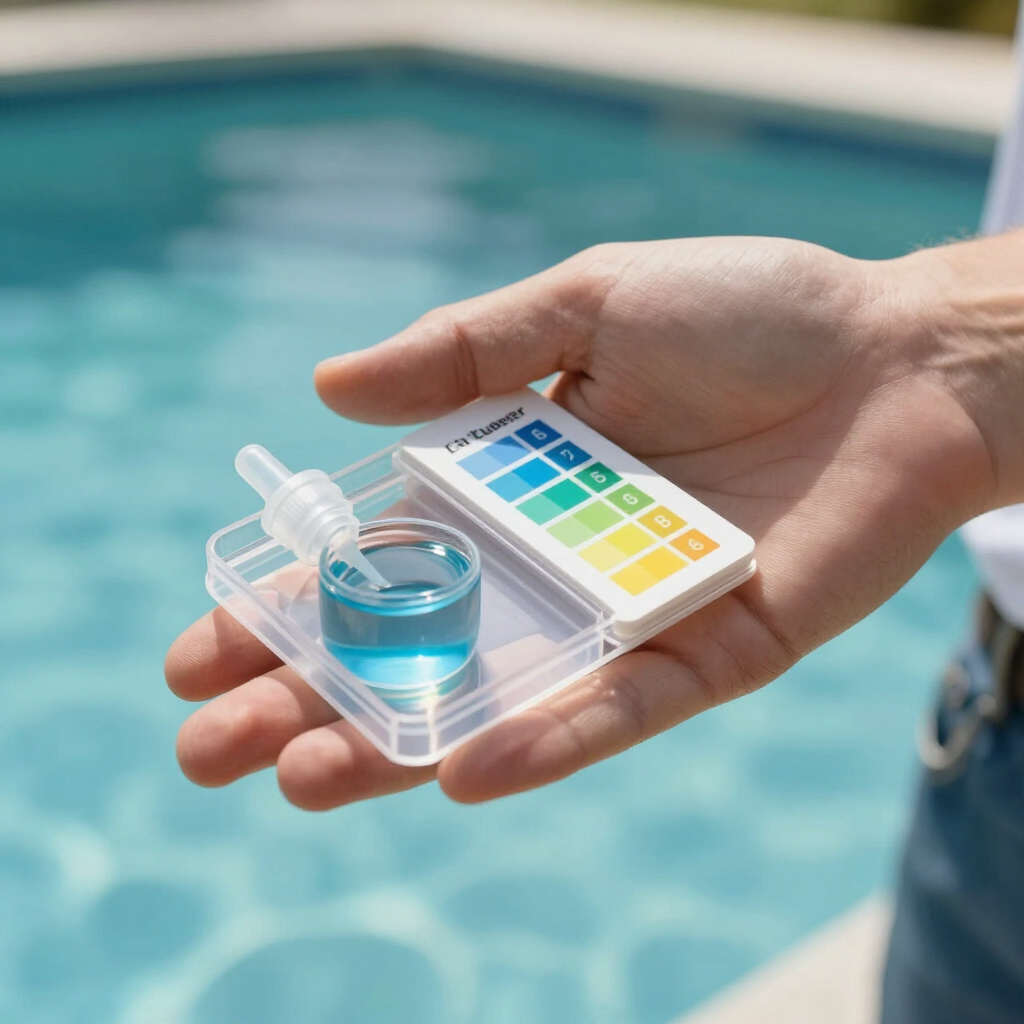
Table of Contents
- Why Arizona's Climate Changes Everything About Pool Chemistry
- How Often Should You Test Your Pool Water?
- What Chemical Levels Should You Be Testing?
- How Arizona's Monsoon Season Affects Pool Water Balance
- Testing Methods: Strips, Kits, or Professional Testing?
- Common Pool Water Testing Mistakes to Avoid
- When Should You Speak With a Pool Professional?
- Conclusion
- Frequently Asked Questions
Key Takeaways
- Arizona pool owners should test pool water at least 2–3 times per week during summer, and daily during heat waves or heavy use periods.
- For every 10°F above 80°F, your pool requires roughly double the chlorine to maintain safe sanitisation levels.
- Key chemical levels to monitor include pH (7.4–7.8), free chlorine (1–3 ppm), total alkalinity (80–120 ppm), and calcium hardness (200–400 ppm).
- Arizona's monsoon season (June to September) can rapidly alter pool water balance through debris, dust, and rainfall dilution.
- Professional pool water testing at least once a month provides a more comprehensive chemical profile than home test kits alone.
Introduction
Pool water testing in Arizona should happen at least 2–3 times per week during the hot months, and potentially more often when your pool sees heavy use. Arizona's extreme heat, intense UV exposure, and naturally hard water create conditions that shift pool chemistry faster than in most other states. Proper pool maintenance keeps your water safe, clear, and comfortable all season long. For Yuma pool owners especially, where summer temperatures regularly exceed 110°F, understanding your testing schedule is not optional — it's essential.
Why Arizona's Climate Changes Everything About Pool Chemistry
Arizona's desert climate is genuinely unlike anywhere else in the country. Summers in Yuma and across southern Arizona routinely push past 110°F, UV radiation is relentless, and evaporation rates are some of the highest in the nation. All of this has a direct and significant impact on your pool water balance.
Here's what happens when the heat cranks up: chlorine breaks down much faster under intense UV radiation. Research consistently shows that for every 10°F rise above 80°F, your pool's chlorine demand roughly doubles (Shine Pools AZ, 2025). That means what was a perfectly balanced pool on Monday morning can be dangerously under-chlorinated by Wednesday afternoon — without any additional swimmers or rainfall changing things.
Beyond chlorine loss, evaporation is a major driver of chemical concentration in Arizona pools. As water evaporates under the scorching sun, it doesn't take dissolved minerals with it. Those calcium and magnesium particles stay behind and gradually concentrate, pushing calcium hardness levels higher and higher over time. This is why swimming pool water balance in Yuma requires ongoing attention, not just a monthly glance at a test strip.
Yuma's water source adds another layer of complexity. Municipal water throughout much of Arizona is naturally high in hardness minerals, pulled from sources like the Colorado River that carve through mineral-rich geology. That starting point means your pool begins with higher-than-average calcium levels before you've added a single chemical.
How Often Should You Test Your Pool Water?
The testing frequency that works in a mild climate simply doesn't cut it here. General guidance recommends testing at least twice a week in summer, and Arizona conditions push that recommendation higher.
Summer (May through September)
Test your pool water a minimum of 2–3 times per week. If your pool gets daily use from children, guests, or regular swimming sessions, bump that up to 4–5 times per week. Sunscreen, sweat, body oils, and swimmer load all affect chemical balance, and in summer heat, those effects are amplified.
Off-Peak Season (October through April)
Testing once or twice a week remains a sensible baseline, even when the pool sees less use. Chemical stability tends to be better in cooler months, but you should still keep a regular routine going. Pool water testing isn't something to pause entirely outside of peak season.
After Specific Events
Always test your pool water after:
- A monsoon storm or dust storm
- A pool party with multiple swimmers
- Adding any new chemicals to the water
- Significant rainfall
- A period of extremely high heat (110°F+)
- Noticing any change in water clarity or colour
These events can rapidly shift your pool chemical testing results in ways that the weekly schedule won't catch in time.
What Chemical Levels Should You Be Testing?
Knowing how often to test matters, but knowing what to test for is equally important. Pool chemical testing in Arizona should cover all of the following parameters.
pH (Target: 7.4–7.8)
pH is the foundation of pool water balance. Too low and the water becomes corrosive, irritating eyes and skin and damaging pool surfaces. Too high and chlorine loses effectiveness, allowing bacteria to thrive. In Arizona, high temperatures and hard water tend to push pH upward, so it's one of the most common values to need adjustment.
Free Chlorine (Target: 1–3 ppm)
This is your primary sanitiser. It kills bacteria and prevents algae growth. With Arizona's UV intensity eating through chlorine rapidly, checking free chlorine levels frequently is non-negotiable. Cyanuric acid (CYA) acts as a sunscreen for chlorine, slowing UV breakdown, and should be maintained at 30–50 ppm to give your chlorine a fighting chance.
Total Alkalinity (Target: 80–120 ppm)
Alkalinity acts as a buffer for pH, keeping it stable between adjustments. Low alkalinity means pH swings wildly with minor chemical additions or rainfall. High alkalinity makes it difficult to move pH even when you need to.
Calcium Hardness (Target: 200–400 ppm)
This is where Arizona stands apart from most states. Calcium hardness above 400 ppm causes scaling on pool surfaces, tiles, and equipment. Because Arizona tap water starts with high calcium content, and evaporation concentrates minerals further, calcium hardness is one of the most actively managed parameters in desert pools. For a closer look at how hard water affects your pool, see our article on pool hard water problems and how to address them.
Cyanuric Acid (Target: 30–50 ppm)
CYA stabilises chlorine against UV degradation. Too low and your chlorine disappears within hours of direct sunlight. Too high and chlorine becomes less effective at sanitising. It's a balance worth tracking monthly at minimum.
Total Dissolved Solids (TDS)
Over time, as water evaporates and chemicals are added, TDS levels climb. High TDS can affect the accuracy of other chemical readings and reduce the effectiveness of sanitisers. In Arizona, where evaporation is constant, TDS tends to rise faster than in humid climates.
How Arizona's Monsoon Season Affects Pool Water Balance
Arizona's monsoon season runs from June through September, and it introduces a new set of challenges on top of the heat. Dust storms can dump significant amounts of debris, organic matter, and fine particles into your pool, all of which consume chlorine and can introduce phosphates that feed algae.
Rainfall during monsoons dilutes your pool water, which sounds helpful at first — but rain is slightly acidic and can drive pH down while also throwing off your carefully balanced alkalinity. After any storm event, pool water testing should happen within 24 hours to assess what has changed and what needs adjustment.
One overlooked aspect of the monsoon season is debris load. Organic material like leaves, dust, and windblown soil all add to the demand on your sanitiser. What's enough chlorine to keep water clean on a calm Tuesday might be completely depleted by Wednesday evening after a dust storm rolls through.
The practical takeaway is to test after every significant weather event, not just on your regular schedule. Swimming pool water balance is dynamic in Arizona, and storm events are when chemical levels shift fastest.
Testing Methods: Strips, Kits, or Professional Testing?
There are three main approaches to pool water testing, each with different accuracy levels and use cases.
Test Strips
Fast and convenient, test strips dip into the water and change colour to indicate chemical levels. They're a practical option for frequent at-home checks during the week. The downside is that they're less precise than liquid test kits, and accuracy can degrade if the strips are old or stored improperly in heat (which is unavoidable in Yuma during summer).
Liquid Test Kits
These are a step up in accuracy. You collect a water sample, add reagent drops, and compare the colour result to a chart. They take a few more minutes but give more reliable readings for pH and chlorine in particular. A good liquid test kit is worth having for your home routine.
Professional Water Testing
Professional pool water testing provides the most complete picture. A water sample is analysed for the full range of parameters, including ones home kits often miss, like TDS and stabiliser levels. Industry professionals recommend bringing a water sample to a pool professional or having your pool service provider test on-site at least once a month.
For Yuma pool owners relying on
professional pool maintenance services, scheduled water testing is typically included as part of a regular service plan, taking the guesswork out of the process entirely.
Common Pool Water Testing Mistakes to Avoid
Even pool owners who test regularly can fall into habits that make their results less useful. Here are the most common missteps.
- Testing at the wrong time of day. Test your water in the morning or evening, not midday. UV radiation during peak sun hours can artificially depress free chlorine readings.
- Collecting water from the surface. Always collect your sample from elbow depth (around 30–45 cm below the surface) for the most representative reading.
- Not running the pump first. Test after the pump has been running for at least 8 hours so the water is properly circulated and chemically consistent throughout the pool.
- Using expired test strips. Heat degrades test strips quickly. In Yuma's summer heat, strips stored in a non-climate-controlled space can become unreliable well before their printed expiry date.
- Skipping testing after adding chemicals. Always retest 4–8 hours after a chemical adjustment to confirm levels have reached their target.
- Testing infrequently and assuming nothing has changed. In Arizona's summer heat, a lot can change in 48 hours. Regular pool chemical testing is how you stay ahead of problems.
When Should You Speak With a Pool Professional?
Home testing covers the essentials, but there are situations where professional input makes more sense.
Consider speaking with a pool professional if:
- Your water repeatedly shows imbalanced readings despite chemical corrections
- You notice persistent cloudiness, discolouration, or foam that doesn't resolve
- There's visible scaling on tiles, surfaces, or equipment
- Algae keeps returning even after treatment
- Your calcium hardness consistently reads above 500 ppm
- You're heading into peak summer season and want a full chemical baseline established
A professional can also identify issues that pool chemical testing alone won't reveal, such as problems with filtration, circulation, or equipment that contribute to recurring water quality issues. If you're in Yuma and haven't had a professional assessment in a while, it's worth scheduling one before the hottest months arrive.
Conclusion
Arizona's intense heat, UV exposure, hard water, and monsoon weather make pool water testing a genuine year-round discipline rather than an occasional chore. Testing 2–3 times per week in summer, targeting the right chemical parameters, and adjusting your routine after storm events gives you the best chance of maintaining safe, clear, and balanced pool water.
Home test kits and strips are a practical tool for frequent checks, but they work best alongside periodic professional testing that catches what basic kits miss. Staying on top of your pool chemical testing schedule is ultimately how you protect your pool, your equipment, and everyone who swims in it.
Need Professional Pool Water Testing Support in Yuma, AZ?
Keeping up with pool water testing across an Arizona summer is a real commitment. If you'd rather leave the chemistry to someone who does this every day, the team at Aqua Clear Pool Services is available across Yuma and surrounding areas. Reach out to discuss pool maintenance options that take the hassle out of water balancing. Call us at 928-318-6640 or send an email at alex@aquaclearpoolservices.net to learn more about our services.
Frequently Asked Questions
How often should we test our pool water during Arizona's summer months?
Test at least 2–3 times per week during summer. If the pool sees daily heavy use or temperatures exceed 110°F, testing 4–5 times per week gives you better control over chemical levels before they drift out of safe range.
What is the most important chemical level for us to monitor in our Arizona pool?
Free chlorine is the most critical because Arizona's UV intensity depletes it rapidly. pH runs a close second, as high heat and hard water constantly push it upward, reducing the effectiveness of your chlorine if left unchecked.
Do we need to test our pool water differently after a monsoon storm?
Yes. Test within 24 hours of any storm event. Dust, debris, and slightly acidic rainfall can all affect chlorine levels, pH, and alkalinity at the same time, requiring multiple chemical adjustments to restore proper pool water balance.
Can we rely on test strips for our pool chemical testing routine?
Test strips are convenient for regular at-home checks but are less accurate than liquid kits. In Yuma's heat, strips degrade faster than in cooler climates. Supplement strips with monthly professional water testing for a complete chemical picture.
How does pool water testing connect to calcium hardness management in Arizona?
Regular testing lets you track calcium hardness before it climbs too high. Arizona's hard tap water and high evaporation rates concentrate calcium steadily. Testing frequently means you can address rising hardness before it causes scaling on surfaces and equipment.