Is It True That a Strong Chlorine Smell Means Your Pool Has Too Much Chlorine?
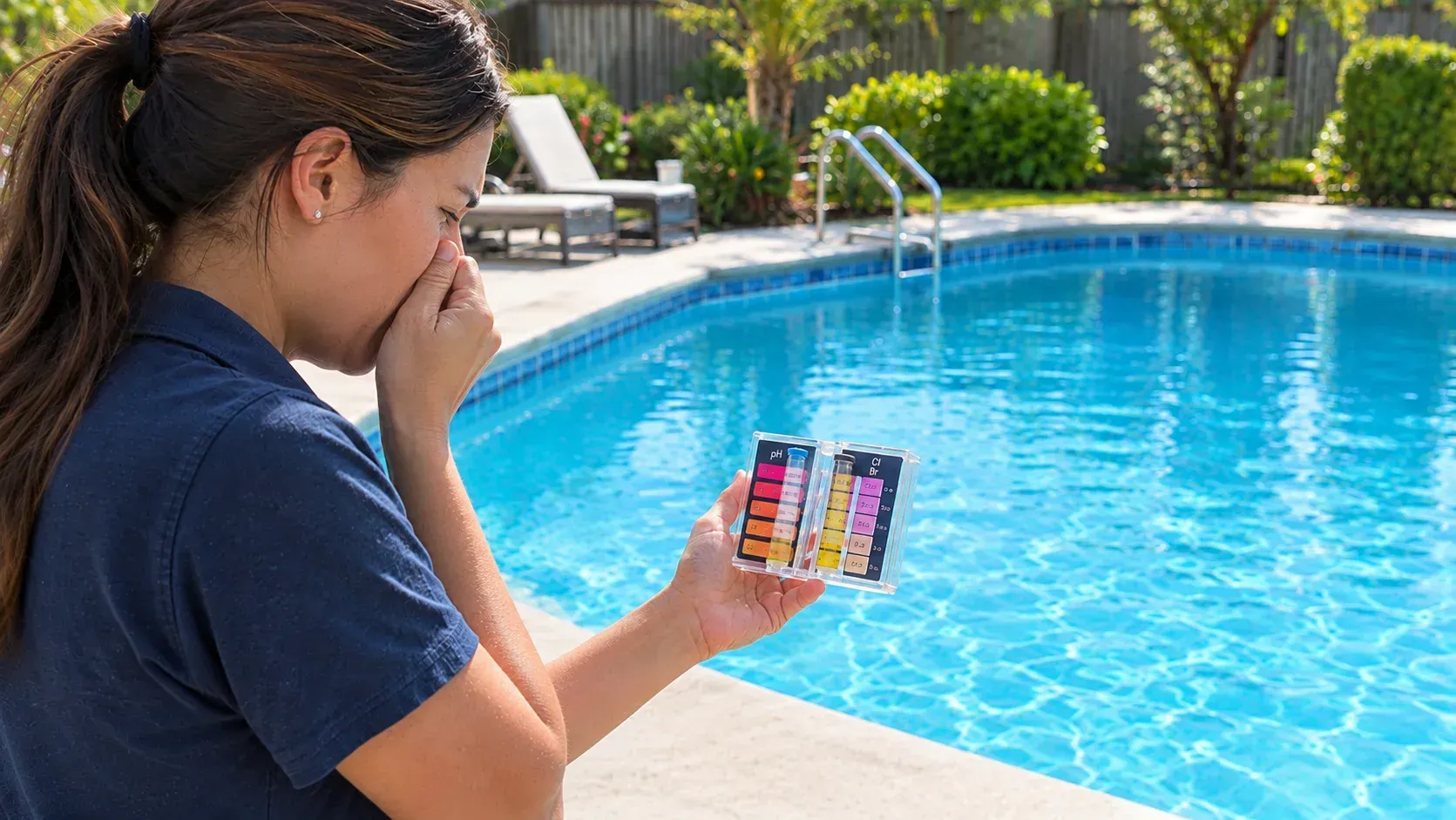
Table of Contents
- The Short Answer: It Is Usually the Opposite
- What That Smell Actually Is: Chloramines, Not Chlorine
- How Chloramines Form in a Swimming Pool
- Why "More Smell" Often Means "Less Effective Sanitizer"
- How to Check What Is Really Happening in Your Water
- Fixing a Strong Chlorine Smell: Shocking and Breakpoint Chlorination
- Common Misconceptions About Pool Chlorine Smell
- A Realistic Scenario: The Pool That Smelled Worse After More Chlorine
- What Typical Online Advice Overlooks
- Risks, Limitations, and When to Get a Professional Water Test
- Conclusion
Key Takeaways
- A strong chlorine smell is usually a sign of too little effective chlorine, not too much, because the odor comes from chloramines rather than from chlorine itself.
- Chloramines form when chlorine reacts with sweat, oils, sunscreen, and other contaminants, and they are both irritating and the source of the familiar "pool smell."
- A basic test strip that reads chlorine as normal may not reveal a chloramine problem, since many simple tests do not separate free chlorine from combined chlorine.
- The usual fix for a strong chlorine odor is to add more chlorine temporarily through a shock treatment, not to reduce it.
- Both homeowners and business owners managing a commercial pool benefit from understanding this distinction, since it changes how water problems are diagnosed and treated.
Introduction
No, a strong chlorine smell does not typically mean a pool has too much chlorine. In most cases, that sharp odor is caused by chloramines, chemical byproducts that form when chlorine reacts with contaminants like sweat, body oils, and sunscreen, and chloramines actually signal that the water needs more effective sanitizer, not less. This distinction is central to good pool water maintenance, and it is one of the most widely misunderstood facts in pool care.
This matters because the common reaction to a strong chlorine smell, which is to add less chlorine or avoid shocking the pool, tends to make the underlying problem worse. For homeowners and for businesses managing a commercial or rental pool, misreading this signal can mean ongoing guest or family complaints, wasted chemical adjustments, and water that never quite smells or feels right. This article explains what actually causes that strong odor, how to tell the difference between a chlorine problem and a chloramine problem, and the straightforward steps that typically resolve it.
The Short Answer: It Is Usually the Opposite
What a Chlorine Smell Actually Indicates
Does a strong chlorine smell mean a pool has too much chlorine?
Direct answer: No. A strong chlorine smell is generally a sign of chloramines, compounds formed when chlorine binds with contaminants, and their presence usually means there is not enough free chlorine actively sanitizing the water.
This runs counter to how most people assume pool chemistry works. The logical guess is that a strong smell means a strong chemical, but with pools, the opposite is usually true. Properly sanitized water with adequate free chlorine and balanced pH tends to have very little odor at all.
Why This Confusion Is So Common
Public pools, locker rooms, and backyard pools have long been associated with a distinct "chlorine smell," so most people grow up assuming that smell simply is chlorine. In reality, that associated odor is almost always a sign of chloramine buildup, not evidence of proper or excessive chlorination.
What That Smell Actually Is: Chloramines, Not Chlorine
Free Chlorine Versus Combined Chlorine
Pool chemistry separates chlorine into a few categories that matter for this topic. Free chlorine is the active sanitizer still available to kill bacteria and algae. Combined chlorine, often called chloramines, is chlorine that has already reacted with contaminants and is no longer sanitizing effectively. Total chlorine is the sum of both.
A basic test strip frequently reports only one of these numbers, sometimes labeled simply as "chlorine," without clarifying whether it reflects free or total chlorine. That gap is a major reason smell complaints and test readings can seem to contradict each other.
Why Chloramines Smell and Irritate
Chloramines are volatile compounds that evaporate easily from the water's surface, which is part of why they are noticeable as an odor, especially in enclosed indoor pool areas. They are also associated with eye and skin irritation and respiratory discomfort for some swimmers, particularly in poorly ventilated indoor facilities.
How Chloramines Form in a Swimming Pool
The Chemical Reaction Behind the Smell
Chloramines form when free chlorine reacts with nitrogen-containing compounds introduced by swimmers and the environment. Common sources include sweat, body oils, cosmetics, sunscreen, and urine. The more organic material entering the water, the more chloramines form as chlorine works to neutralize it.
Why Heavy Use Makes the Smell Worse
A pool used heavily by children, by many guests at once, or by a steady stream of swimmers in a commercial setting accumulates these contaminants faster. That is one reason a pool can smell noticeably stronger after a busy weekend or a full day of guest traffic than it does on a quiet day, even if chlorine was added at a consistent rate.
Indoor Pools and Ventilation
For business owners managing an indoor commercial pool, chloramine odor is a particularly well-documented issue, since chloramine gas can accumulate in the air above the water when ventilation is inadequate. This is part of why indoor aquatic facilities often invest specifically in air handling systems alongside standard water treatment.
Why "More Smell" Often Means "Less Effective Sanitizer"
The Counterintuitive Relationship
Because chloramines represent chlorine that has already been consumed by contaminants, a stronger smell generally indicates that a larger share of the pool's chlorine supply has been used up fighting organic material rather than actively sanitizing the water. In that sense, the smell is a byproduct of chlorine demand outpacing chlorine supply, not evidence of excess.
What This Means for Water Safety
When combined chlorine climbs, it can mean there is less free chlorine available to handle new contaminants and pathogens as they enter the water. Public health guidance, including recommendations commonly referenced by the Centers for Disease Control and Prevention, generally suggests keeping combined chlorine low, often cited around 0.4 parts per million or below, specifically because higher levels are linked to both reduced sanitizing capacity and increased irritation.
How to Check What Is Really Happening in Your Water
The Testing Gap Most Owners Miss
To understand whether a smell reflects a chloramine problem, you need a test that reports free chlorine and total chlorine separately, not just a single combined number. Subtracting free chlorine from total chlorine gives you the combined chlorine reading, which is the figure that actually explains odor and irritation.
A Simple Comparison Table
| Reading | What It Measures | What It Tells You |
|---|---|---|
| Free chlorine | Active sanitizer available | Whether the pool has enough chlorine working right now |
| Combined chlorine (chloramines) | Chlorine already used up by contaminants | Whether odor, irritation, and reduced sanitizing capacity are likely |
| Total chlorine | Free plus combined | The overall chlorine picture, but not useful alone for odor questions |
| pH | Acidity or alkalinity of the water | Whether chlorine is working efficiently and whether water feels comfortable |
A strong smell paired with low free chlorine and elevated combined chlorine points clearly toward a chloramine problem rather than an overdose of sanitizer.
Fixing a Strong Chlorine Smell: Shocking and Breakpoint Chlorination
Why Adding Chlorine Is Usually the Right Move
The standard way to resolve a chloramine-driven odor is to raise free chlorine high enough, temporarily, to break the chloramine molecules apart. This process is commonly called shocking the pool, and the specific chlorine level needed to fully break down chloramines is referred to as breakpoint chlorination.
What the Process Generally Involves
A shock treatment typically means adding a larger-than-normal dose of chlorine, following product label instructions carefully, and allowing the pool to circulate thoroughly before swimmers return. Once chloramines are broken down, both the odor and much of the associated irritation usually subside.
Why Simply Waiting Does Not Work
A common instinct is to wait for the smell to fade on its own, assuming the chlorine will "burn off." Without addressing the underlying chloramine buildup, this approach tends to prolong the problem, since chloramines do not necessarily dissipate quickly through routine circulation alone, especially if contaminant sources continue, such as ongoing heavy pool use.
Common Misconceptions About Pool Chlorine Smell
Misconception One
Common belief: A strong chlorine smell means the pool has too much chlorine. What is actually true: The smell is almost always chloramines, which form when chlorine has already reacted with contaminants, not an indicator of excess active chlorine. Why it matters: Reducing chlorine in response to the smell can make water quality and sanitation worse.
Misconception Two
Common belief: If my chlorine test reads normal, odor and irritation issues cannot be a chlorine problem. What is actually true: A single "chlorine" reading on a basic strip often does not separate free chlorine from combined chlorine, so a chloramine issue can be present without showing up clearly. Why it matters: Owners may rule out chlorine as the cause and overlook the actual issue.
Misconception Three
Common belief: Less chlorine use will naturally reduce pool odor over time.
What is actually true: Reducing chlorine input can allow chloramines and contaminants to persist or increase, since there is less active sanitizer to address organic material entering the water.
Why it matters: This common response often worsens the smell and irritation instead of improving it.
A Realistic Scenario: The Pool That Smelled Worse After More Chlorine
Consider a hypothetical situation involving a small business owner who manages a community or rental property pool. After noticing a strong chlorine smell and a few guest complaints about stinging eyes, the owner decides to add chlorine tablets more frequently, assuming the existing level simply was not high enough.
Despite this, the smell persists and seems to get slightly stronger after a busy weekend with many guests. A water test that separates free and combined chlorine reveals that free chlorine had actually been running low, while combined chlorine was elevated, meaning the added tablets were primarily reacting with existing contaminants rather than meaningfully raising free chlorine.
In this type of situation, a single properly dosed shock treatment, bringing free chlorine high enough to reach breakpoint chlorination, resolves what steady low-dose additions had not. This illustrates why the method and intensity of chlorine addition matters, not simply whether chlorine is being added at all.
What Typical Online Advice Overlooks
The Business Context Is Often Ignored
Much general advice online addresses only residential backyard pools, which leaves out considerations relevant to business owners managing a commercial, rental, or shared community pool. Higher swimmer volume, regulatory testing requirements that may apply to public-use pools, and ventilation concerns for indoor facilities all affect how chloramine issues should be approached in a commercial setting.
Testing Equipment Limitations Are Rarely Explained
Generic articles often say "test your chlorine" without clarifying that basic test strips may not distinguish free from combined chlorine. Without that distinction, an owner can test repeatedly and remain confused about why a "normal" reading does not match a persistent odor complaint.
The Role of Ventilation for Indoor Pools
For indoor pools, simplified advice rarely addresses that chloramine gas accumulates in the air, not just the water, and that ventilation and air handling play a meaningful role in managing odor and swimmer comfort, separate from water chemistry adjustments alone.
Equipment and Circulation Can Compound the Problem
Weak circulation or an undersized pump can slow how quickly a shock treatment distributes and takes effect, prolonging a chloramine problem even after the correct chemical steps are taken. Owners dealing with recurring odor issues sometimes find that equipment performance is part of the underlying picture, which is worth reviewing alongside chemistry when the problem keeps returning.
Risks, Limitations, and When to Get a Professional Water Test
The general relationship between chloramines and pool odor described here reflects widely recognized pool chemistry principles, but the right approach for a specific pool can depend on its size, use level, sanitizer type, and whether it is indoors or outdoors. Salt-water systems, for example, still generate and are subject to chloramine formation, though day-to-day management can look somewhat different.
Shock treatments involve concentrated oxidizing chemicals, and manufacturer label instructions should always be followed exactly, including guidance on swimmer re-entry time. Chemicals should never be combined or added together without following product directions.
If odor and irritation persist after a proper shock treatment, or if the problem recurs frequently despite consistent maintenance, a comprehensive professional water test is often the most reliable way to identify what a basic test strip may be missing, whether that involves stabilizer levels, circulation issues, or another underlying factor. Business owners operating a public-use pool should also confirm current local and state health code testing requirements with the appropriate regulatory authority, since those requirements can be more detailed than general residential guidance.
Conclusion
A strong chlorine smell is, in most cases, a sign of chloramines rather than excess chlorine, and it generally points to a shortage of effective free chlorine relative to the contaminants entering the water. Understanding the difference between free chlorine, combined chlorine, and total chlorine is the key to correctly diagnosing the smell, since a basic test reading can look "normal" while a chloramine problem is actively present.
The usual resolution, shocking the pool to reach breakpoint chlorination, often runs counter to the instinct to reduce chlorine use when a strong smell appears. For both homeowners and business owners managing pools with heavier swimmer traffic, recognizing this distinction supports more accurate water testing, more effective treatment, and a better understanding of what the smell is actually communicating about the water.
Dealing With a Pool That Always Smells Strongly of Chlorine?
If your pool has a persistent chlorine smell that will not go away, a complete water test can usually identify whether chloramines, circulation, or another factor is the real cause. Feel free to
get in touch with our team
with questions about your pool's water chemistry or maintenance routine. There is no pressure and no obligation, just straightforward information to help you understand what your water is telling you.
Frequently Asked Questions
Does a strong chlorine smell mean my pool has too much chlorine?
No. A strong smell is usually caused by chloramines, byproducts formed when chlorine reacts with contaminants. It typically indicates a shortage of effective free chlorine rather than an excess.
What are chloramines and why do they smell?
Chloramines form when chlorine combines with sweat, oils, sunscreen, and similar contaminants. They are volatile and evaporate easily from the water's surface, which creates the familiar strong "pool smell."
Will adding more chlorine make the smell worse?
A properly dosed shock treatment, which temporarily raises free chlorine to break down chloramines, generally resolves the smell. Routine low-level additions without reaching that threshold may not fix the underlying issue.
Can my pool test normal and still have a chloramine problem?
Yes. Many basic test strips do not separate free chlorine from combined chlorine. A single "chlorine" reading can look acceptable while chloramines remain elevated and unaddressed.
Is a strong chlorine smell different for commercial or indoor pools?
It can be. Indoor facilities may experience chloramine gas buildup in the air, which ventilation helps manage, and commercial pools may be subject to specific water testing requirements under local health codes.