How Often Should a Pool Pump Be Serviced in Yuma, Arizona's Heat?
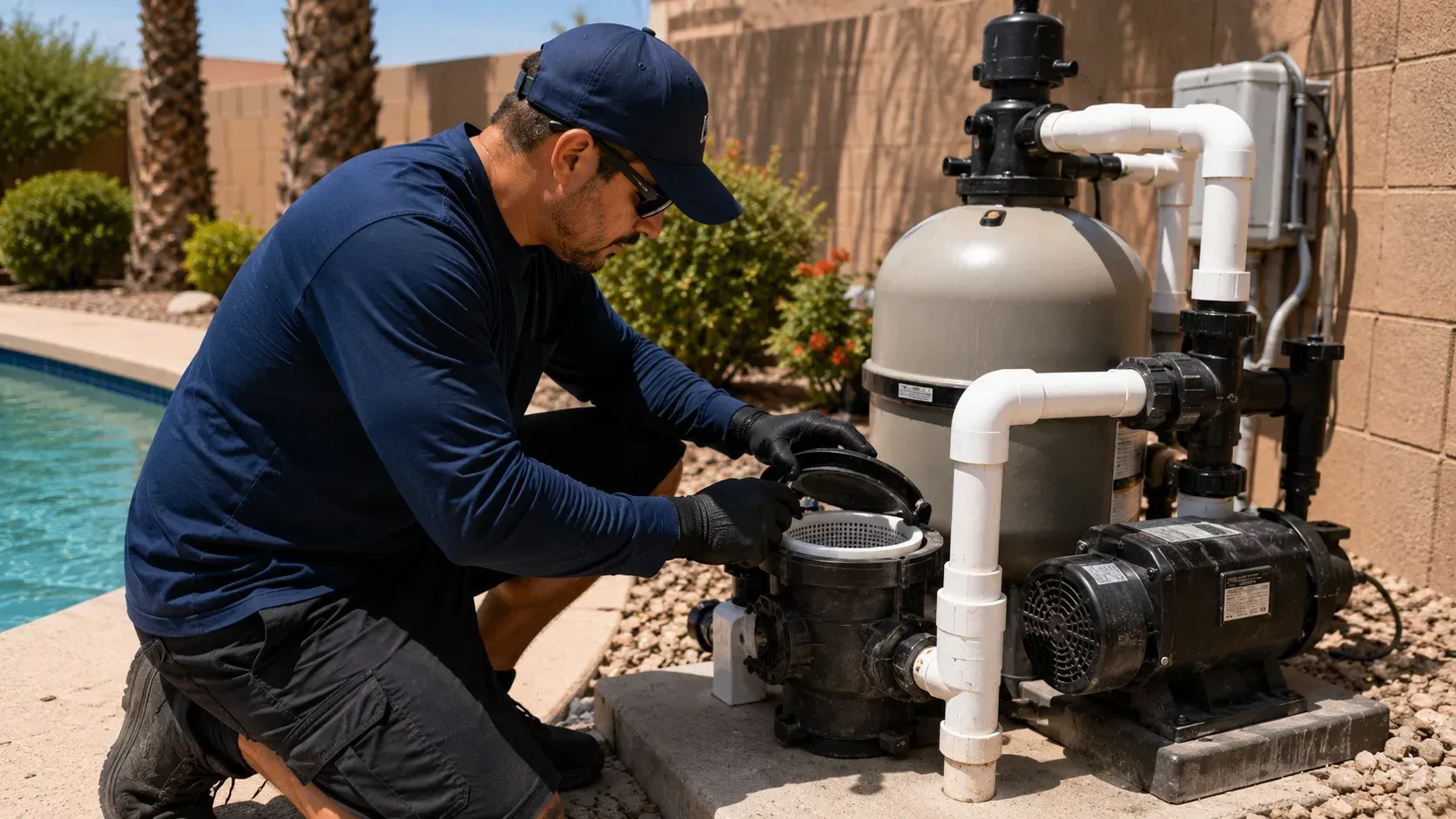
Table of Contents
- Introduction
- How Yuma's Climate Affects Pool Pump Wear
- Recommended Service Frequency for Yuma Pool Pumps
- What a Pool Pump Service Involves
- Signs Your Pump Needs Attention Sooner
- How Long Should a Pool Pump Run Daily in Yuma?
- How Pump Maintenance Connects to Water Quality
- When to Repair vs. Replace a Pool Pump
- Conclusion
- Questions About Your Pool Pump?
- Frequently Asked Questions
Key Takeaways
- Pool pumps in Yuma work harder and longer than in most climates, which means wear accumulates faster and service intervals matter more.
- An annual professional inspection is a reasonable baseline, with more frequent attention during peak summer months when the pump runs 8 to 12 hours daily.
- Unusual noise, reduced flow, tripped breakers, and visible leaks are signs a pump needs service before the next scheduled visit.
- Basic owner tasks — cleaning the strainer basket, checking for leaks, and keeping the area around the pump clear — extend the time between service calls.
- A pump that runs reliably is what makes everything else in pool maintenance work, from chemical distribution to filtration.
Introduction
A pool pump in Yuma should be professionally inspected at least once a year, with the timing ideally falling before the peak summer season. In practice, Yuma's climate means pumps run longer hours and handle more demanding conditions than they would in cooler regions, so some owners and service professionals check them more frequently — especially when problems surface mid-season.
Yuma's climate puts unusual strain on this equipment, which is why a steady approach to pool maintenance matters more here than in milder regions. This guide explains how often servicing makes sense, what it involves, and how to spot trouble before it grows into a bigger repair.
How Yuma's Climate Affects Pool Pump Wear
Yuma sees some of the highest sustained temperatures in the country, with summers regularly reaching 110°F or more. That heat affects pool pumps in a few direct ways.
Extended Run Times. To keep water circulating adequately during peak season, pumps in Yuma typically need to run 8 to 12 hours a day. That is significantly more than pumps in moderate climates, and it accumulates into a much higher annual run-hour total over the life of the equipment.
Motor Heat. Pool pump motors generate heat during operation. In ambient temperatures above 100°F, the motor has less ability to shed that heat into the surrounding air, which can shorten bearing life and stress insulation on motor windings over time.
Dust and Debris. Yuma's desert environment means dust, sand, and wind-blown debris are constant. Fine particles can work into pump components, and dust accumulation around the motor affects heat dissipation. Haboobs and monsoon events add sudden heavy debris loads.
Evaporation and Water Loss. High evaporation in summer means pool water levels drop faster, and low water levels can allow air into the suction line, causing the pump to run dry for short periods. Even brief dry running puts significant stress on seals and impellers.
Recommended Service Frequency for Yuma Pool Pumps
A professional inspection once a year is a reasonable baseline for most residential pool pumps in this climate. The best timing is spring, before the pump starts carrying the heavy summer load, so any issues found can be addressed before they become failures during the hottest months.
Pumps that are older, have had previous repairs, or show any signs of wear may benefit from checks at six-month intervals. Some pool service programs include pump inspection as part of routine visits, which makes it easier to catch developing problems early without scheduling separate calls.
Owner-level maintenance between professional visits — cleaning the strainer basket, checking for leaks, and monitoring pump performance — adds another layer of protection. These are quick checks that can flag issues before they become service calls.
What a Pool Pump Service Involves
A professional pump service typically goes through several components to assess condition and catch wear before it causes failure.
Motor inspection. This includes checking for unusual sounds, testing amperage draw, and looking at the motor housing for signs of overheating or damage. A motor drawing significantly more current than rated can indicate internal wear or a developing problem.
Seal inspection and replacement. The mechanical seal between the motor and the wet end of the pump is a common wear item. A leaking seal lets water reach the motor bearings, which accelerates damage. Seals are relatively inexpensive to replace proactively and much cheaper than the motor repair that follows a seal failure.
Impeller check. The impeller moves water through the pump. Debris that bypasses the strainer basket can chip or clog the impeller, reducing flow. A technician checks for damage and clears any obstruction.
Strainer basket and housing. The basket itself and the O-ring on the lid are inspected. A cracked basket or deteriorated O-ring can allow air into the system, affecting prime and circulation efficiency.
Connections and fittings. Plumbing connections at the pump are checked for leaks, which in a hot climate can worsen quickly as PVC fittings expand and contract with temperature cycles.
Signs Your Pump Needs Attention Sooner
A scheduled annual service is a baseline, not a ceiling. These signs suggest a pump needs attention before the next scheduled visit.
Unusual noise. Grinding, screeching, or rattling from a pump that previously ran quietly points to bearing wear, debris in the impeller, or other internal issues. Addressing noise early usually costs less than waiting for the component to fail completely.
Reduced water flow. If returns are noticeably weaker than usual and the filter pressure has not climbed enough to explain it, the pump may have a clogged impeller, air leak, or developing motor problem.
Pump loses prime repeatedly. A pump that keeps losing prime and needs to be reprimed manually is usually dealing with an air leak somewhere in the suction line or at the lid O-ring. Consistent air ingestion puts stress on the pump and reduces filtration efficiency.
Tripped breaker. A pump that trips its breaker is drawing more current than normal, which points to motor stress. This should be investigated promptly rather than reset repeatedly.
Visible leaks. Water pooling under the pump pad or at plumbing connections is worth addressing quickly, especially in a desert environment where even small leaks waste water and can worsen with thermal cycling.
How Long Should a Pool Pump Run Daily in Yuma?
In peak summer, most Yuma pools need the pump running 8 to 12 hours a day to turn over the water volume adequately and distribute sanitizer effectively. Some larger pools or pools with heavy use may need the full 12 hours.
Running the pump in the cooler overnight hours rather than midday slightly reduces the thermal stress on the motor, since ambient temperatures are lower. It also means the pump is circulating water during periods when chlorine is not being burned off by direct sunlight, which can make sanitizer management a little more efficient.
Reducing run time significantly below 8 hours to save on electricity is a trade-off that often shows up as water quality and algae problems, which end up costing more to fix than the electricity savings.
How Pump Maintenance Connects to Water Quality
A pump that is not circulating water well affects everything downstream. Chlorine cannot distribute evenly through the pool without adequate flow, which creates dead spots where algae can take hold. The filter cannot do its job without adequate flow pushing water through the media.
When a pump starts losing flow gradually — as happens with a slowly clogging impeller or a motor losing efficiency — the effect on water quality can be subtle at first, showing up as slightly cloudier water or algae starting in the far corners of the pool before the cause is obvious. This is one reason monitoring pump performance over time matters, not just checking that the pump is running.
When to Repair vs. Replace a Pool Pump
This question comes up most often when a pump has a significant failure — a burned motor, a cracked housing, or repeated seal problems. The general framework is to compare the repair cost against the pump's age and remaining expected life.
As pumps age, repairs can start to add up, and an aging motor running in extreme heat may fail again before long. At that point, some owners weigh the cost of ongoing repairs against a newer, often more energy-efficient unit. Information on the new equipment side of pool ownership can help frame that comparison.
The specifics depend on the pump model, the nature of the failure, and local repair costs, so a technician's assessment of the particular situation is the most reliable guide.
Conclusion
Pool pumps in Yuma face demands that pumps in most other climates do not — longer daily run times, extreme ambient heat, and constant dust exposure. An annual professional inspection before the summer season, combined with owner-level monitoring between visits, is a practical approach to catching problems before they turn into expensive failures or mid-summer breakdowns.
Watching for the warning signs — noise, reduced flow, air ingestion, and breaker trips — gives an early signal before problems worsen. And since the pump drives everything else in the pool system, keeping it in good condition has a direct effect on water quality and the overall effort required to maintain the pool through the summer.
Questions About Your Pool Pump?
If your pump is making new noises, losing flow, or struggling in the heat, a professional inspection can tell you where it stands. Feel free to contact us or call (928) 318-6640 with questions about your pump, circulation, or service schedule. No pressure and no obligation, just clear information so you can decide what makes sense for your pool.
Frequently Asked Questions
At minimum, once a year — ideally in spring before peak summer use. Older pumps or those showing wear may benefit from inspection every six months. Owner-level checks like cleaning the strainer basket and watching for leaks or noise should happen more regularly.
Pumps need to run longer daily to maintain adequate circulation in the heat, which adds up to more annual run hours. High ambient temperatures also make it harder for motors to shed heat, and desert dust adds wear on components and reduces heat dissipation around the motor.
Unusual grinding or screeching noise, weaker return flow than normal, repeated loss of prime, a tripped breaker, or visible water leaks at the pump or nearby plumbing connections all point to a need for service.
Most Yuma pools need 8 to 12 hours of daily pump run time during peak summer. Running less than that often leads to water quality problems that cost more to correct than the electricity savings gained.
A typical service inspection covers the motor condition and amperage draw, the mechanical seal, impeller condition, strainer basket and lid O-ring, and plumbing connections for leaks. The goal is to identify wear before it causes a failure.
Running at least part of the daily cycle overnight reduces motor heat stress slightly since ambient temperatures are lower. It also circulates water when UV is not burning off chlorine, which can support better sanitizer efficiency.
A pump under five years old with a single failure is usually worth repairing. A pump over ten years old with repeated repairs or significant wear is often a better candidate for replacement. A technician assessment of the specific failure and pump condition gives the most reliable guidance.