
What Causes Green Algae to Form Quickly in Pools During Yuma, Arizona Summers?
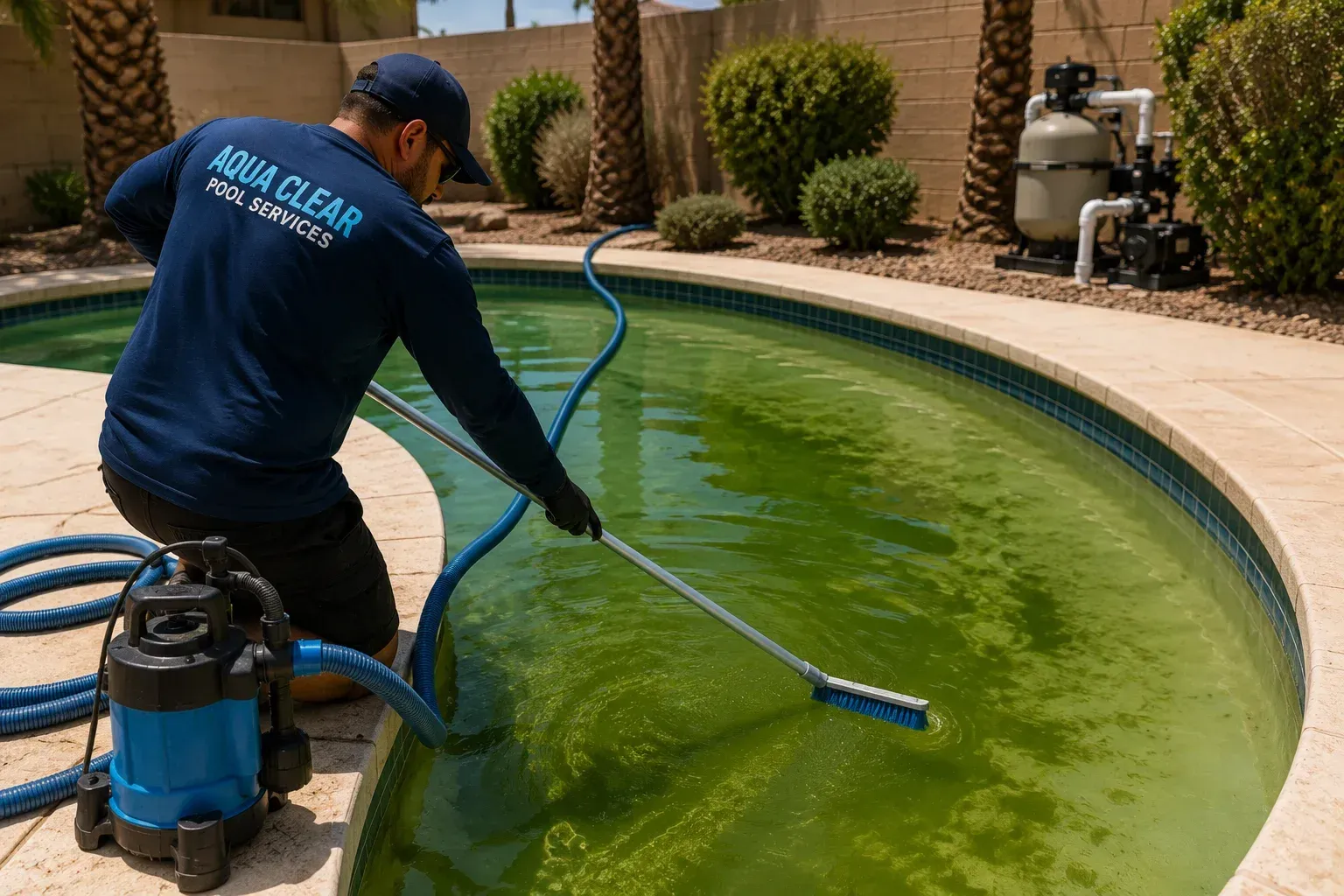
Table of Contents
- Introduction
- The Short Answer: Heat, Low Chlorine, and Still Water
- What Green Algae Is and How It Enters a Pool
- Cause 1: Warm Water and Intense Sunlight
- Cause 2: Low or Unstabilized Chlorine
- Cause 3: Poor Circulation and Dead Spots
- Cause 4: Weak or Overloaded Filtration
- Cause 5: Unbalanced Water Chemistry
- How to Prevent Green Algae in a Yuma Pool
- What to Do When Algae Has Already Formed
- Conclusion
- Not Sure Why Your Pool Keeps Turning Green?
- Frequently Asked Questions
Key Takeaways
- Green algae grows fast in Yuma because warm water, constant sunlight, and low chlorine create ideal conditions for it to multiply within a day or two.
- Algae spores enter the pool constantly through wind, dust, and swimmers, so prevention is about controlling conditions, not keeping spores out.
- Poor circulation and dead spots where water barely moves are common places for algae to take hold first.
- Low or unstabilized chlorine is the single biggest trigger, because it lets spores that are always present start growing.
- Consistent testing, adequate filter run times, brushing, and quick action after storms prevent most algae blooms before they turn the water green.
Introduction
Green algae forms quickly in Yuma pools because the summer climate gives it everything it needs at once: warm water in the 90s, some of the most intense sunlight in the country, and chlorine that burns off faster than most owners replace it. When sanitizer drops and water sits still in a heated pool, algae spores that are always present begin multiplying, and a clear pool can turn green in a day or two.
This matters because green algae is more than an eyesore. It makes surfaces slippery, clouds the water enough to hide swimmers, clogs filters, and consumes chlorine so fast that the whole pool becomes harder to sanitize.
Understanding the specific conditions behind an algae bloom helps Yuma homeowners prevent it instead of reacting after the water has already turned. A steady pool maintenance routine is what keeps those conditions from lining up. This guide covers the main causes and the practical steps that keep algae from getting a foothold.
The Short Answer: Heat, Low Chlorine, and Still Water
Algae grows faster as water warms. Sunlight feeds it directly through photosynthesis while simultaneously destroying unprotected chlorine. Low or unstabilized sanitizer removes the one thing holding algae back. Poor circulation creates still spots where chlorine doesn't reach. When all of these line up — which they do every Yuma summer — algae blooms fast.
What Green Algae Is and How It Enters a Pool
Green algae is a microscopic plant that floats freely in the water or clings to walls and floors. It is the most common type found in home pools and the fastest to spread. In the right conditions it can double its population in under a day.
Spores arrive constantly and there is no way to keep them out. Wind carries them in on dust, rain washes them off surrounding surfaces, and swimmers bring them in on skin, hair, and swimwear. Because the spores are always present, preventing algae is not about blocking it — it is about denying it the conditions it needs to grow.
Those conditions are simple: sunlight, warmth, nutrients, and low sanitizer. Yuma summers supply the first two in abundance, which is why the other two are where prevention actually happens.
Cause 1: Warm Water and Intense Sunlight
Algae grows faster as water warms. Once a pool climbs into the upper 80s and 90s — which is normal in a Yuma summer — algae reproduces far more quickly than it does in cooler water.
Sunlight adds a second problem. Algae uses light for photosynthesis, so long, bright days feed it directly. At the same time, that same ultraviolet light destroys unprotected chlorine, removing the one thing holding the algae back. Heat and sun work as a pair: one speeds algae up while the other strips away its main defense.
Cause 2: Low or Unstabilized Chlorine
Low chlorine is the trigger behind most green pools. When free chlorine falls near zero, even for part of a day, spores that were being killed on contact suddenly have room to grow. In Yuma's heat that window can open every single afternoon if chlorine is not maintained.
Stabilizer, also called cyanuric acid, is what keeps chlorine from vanishing in the sun. With too little, chlorine can disappear before noon. With too much — which builds up when tablets are the only chlorine source — the chlorine present works slowly and algae can grow even when a test shows chlorine is there.
This is why owners are sometimes surprised by algae despite "having chlorine in the pool." The reading alone does not tell the whole story if stabilizer is out of range. Regular testing of both is the reliable way to know where things stand.
Cause 3: Poor Circulation and Dead Spots
Algae takes hold first where water sits still. Steps, corners, behind ladders, and the shaded side of the pool often become dead spots where circulation is weak. Chlorine does not reach those areas well, so algae settles in and spreads outward from there.
Circulation depends on the pump running long enough and the return jets aimed to move water through the whole pool. A pump that runs only a few hours a day in summer leaves large stretches of time when nothing is moving and chlorine is not being distributed. Poor circulation is one of the most overlooked causes of repeat algae problems.
Cause 4: Weak or Overloaded Filtration
The filter removes algae and the fine debris that feeds it. In summer, most Yuma pools need 8 to 12 hours of daily run time to turn the water over and keep up with the constant dust load. Shorter run times leave particles and early algae in the water.
A filter clogged with dust cannot do its job either. When filter pressure rises well above its clean baseline, flow drops and water clarity suffers. Aging or undersized pumps that have lost flow make this worse, since weak circulation and weak filtration usually go together. Owners weighing an upgrade can find context on the new equipment side of pool ownership before making a decision.
Cause 5: Unbalanced Water Chemistry
Chlorine does not work well in water that is out of balance. When pH drifts too high, chlorine becomes far less effective at killing algae, even if the chlorine level itself looks fine. High pH is common in Yuma because evaporation and hard fill water push it upward over the summer.
Alkalinity and pH work together to keep the water stable. When they swing, chlorine efficiency swings with them, and algae gets openings it would not otherwise have. Phosphates from dust, fertilizer runoff, and debris also act as a nutrient source, giving algae extra fuel when other conditions favor growth.
Balanced water is not just about comfort or protecting surfaces — it is what lets your sanitizer actually do the work of holding algae back.
How to Prevent Green Algae in a Yuma Pool
Prevention comes down to keeping the conditions algae needs from lining up. A practical summer routine looks like this:
- Test two to three times per week. Track free chlorine, pH, and stabilizer, since these control whether algae can grow.
- Keep chlorine steady. Maintain 1 to 3 parts per million, and keep stabilizer in the 30 to 50 range so the sun does not strip it away.
- Run the pump longer. Aim for 8 to 12 hours a day in summer to circulate water and distribute chlorine.
- Brush weekly. Brushing walls, steps, and corners disrupts algae before it can anchor, especially in dead spots.
- Clean the filter. Backwash or rinse when pressure rises 8 to 10 psi above clean baseline.
- Act fast after storms. Haboobs and monsoon rains add spores and nutrients, so test and clean within a day or two.
The same desert conditions apply across the region, so this routine holds whether the pool is in central Yuma or out in the Fortuna Foothills area.
What to Do When Algae Has Already Formed
If the water has turned green, the goal is to kill the algae and then remove it. A common sequence is to test and balance the water first, then shock the pool with a high dose of chlorine, keeping the pump running continuously.
Brushing matters as much as chemicals here. Algae clinging to walls and floors resists chlorine until it is scrubbed loose, so brushing the entire pool during treatment helps the sanitizer reach it. After the algae dies, it often leaves cloudy or settled debris that the filter must clear, which can take a day or two of continuous running and possibly a filter cleaning partway through.
Stubborn or fast-returning algae usually means an underlying issue — like low stabilizer, poor circulation, or high phosphates — that treatment alone did not fix. A full water analysis is the practical way to find what keeps feeding the problem.
Conclusion
Green algae forms fast in Yuma summers because warm water and intense sun speed its growth while stripping away the chlorine that holds it back. Low or unstabilized sanitizer, poor circulation, weak filtration, and unbalanced chemistry each open a door, and in the desert heat those doors tend to open at the same time.
Prevention is more reliable and less costly than treatment. Consistent testing, steady chlorine protected by the right stabilizer level, adequate circulation and filtration, and regular brushing keep the conditions algae needs from ever lining up. Owners who understand these causes can judge for themselves what to manage on their own and when a problem calls for a closer look.
Not Sure Why Your Pool Keeps Turning Green?
If algae keeps coming back no matter what you do, a proper water analysis usually points to the reason quickly. Feel free to contact us or call (928) 318-6640 with questions about your pool's chemistry, circulation, or maintenance routine. No pressure and no obligation, just clear answers so you can decide what works best for your pool.
Frequently Asked Questions
Warm water, constant sunlight, and low chlorine let algae spores that are always in the water multiply rapidly. In summer heat, a pool with low sanitizer can turn green within a day or two.
Algae usually looks cloudy green and may feel slimy on walls and steps. Clear green-tinted water is more often caused by dissolved metals like copper or iron, which do not respond to shocking the way algae does.
It is not recommended. Algae itself is not always harmful, but green water often signals low sanitizer, which means bacteria may be present, and slippery surfaces and poor visibility add safety risks.
Testing two to three times per week is reasonable during Yuma summers. Heat and sun burn through chlorine quickly, so weekly testing alone often leaves gaps where algae can start.
Shocking kills existing algae, but it will not prevent a return if the underlying cause remains. Low stabilizer, poor circulation, or high phosphates can bring algae back within days if they are not addressed.
This often points to a stabilizer or pH problem. Too much stabilizer or high pH makes chlorine work slowly, so algae can grow even when a test shows chlorine is present.
Yes, circulation is a major factor. Running the pump 8 to 12 hours a day in summer distributes chlorine and keeps water moving, which makes it harder for algae to settle in still areas.