
How Often Should Pools Be Cleaned During Summer in Yuma, Arizona?
Key Takeaways
- Most pools in Yuma need cleaning at least once a week during summer, and skimming often needs to happen every day or two.
- Triple-digit heat speeds up chlorine loss and evaporation, so water testing should happen two to three times per week from June through September.
- Dust storms and monsoon weather can undo a fresh cleaning overnight, which makes flexible scheduling more useful than a fixed routine.
- Filters should run longer in summer, usually 8 to 12 hours a day, and baskets should be emptied more often than in cooler months.
- Heavy swimmer traffic adds sunscreen, sweat, and debris to the water, all of which raise the demand on chemicals and filtration.
Table of Contents
- The Short Answer: Weekly Cleaning at a Minimum
- Why Yuma Summers Are Hard on Pools
- A Realistic Summer Cleaning Schedule for Yuma Pools
- Water Testing and Chemical Balancing in Extreme Heat
- Filtration: How Long Should the Pump Run in Summer?
- How Heavy Use Changes Your Cleaning Needs
- Monsoon Season and Dust Storms: Plan for Extra Cleanings
- Signs Your Current Schedule Is Not Keeping Up
- Conclusion
Introduction
During summer in Yuma, Arizona, pools should be cleaned at least once per week, with skimming every one to two days and water testing two to three times per week. In peak heat, or after a dust storm or a busy pool weekend, many pools need attention even more often than that.
That answer surprises some homeowners, because in milder climates a pool can coast on a lighter routine. Yuma is different. Summer temperatures regularly sit above 105 degrees, the air carries fine desert dust, and pools get used harder here than almost anywhere else because swimming is one of the few comfortable outdoor activities from June through September.
All of that combines to push a pool's chemistry and filtration to their limits. A consistent pool maintenance routine is what keeps water clear, safe, and swimmable through the hottest months. This guide breaks down what that routine looks like, why the desert climate demands it, and how to tell when your current schedule is falling behind.
The Short Answer: Weekly Cleaning at a Minimum
For a residential pool in Yuma during summer, once-a-week full cleaning is the baseline, not the ideal. A full cleaning means skimming the surface, brushing the walls and steps, vacuuming the floor, emptying the skimmer and pump baskets, and checking the filter pressure.
On top of that weekly service, smaller tasks need to happen between cleanings. Surface debris should be skimmed every day or two. Water chemistry should be tested at least twice a week. Baskets may need emptying midweek if trees, wind, or storms are dropping debris into the water.
Think of it as one thorough cleaning per week, supported by quick daily habits. Pools that only get touched once a week with nothing in between tend to slide toward cloudy water by August.
Why Yuma Summers Are Hard on Pools
Extreme Heat Burns Through Chlorine
Sunlight and heat break down chlorine quickly. In Yuma's summer sun, an unstabilized pool can lose most of its free chlorine in a single afternoon. Warm water also encourages algae and bacteria to grow faster, so the pool needs more sanitizer at the exact moment sanitizer is disappearing fastest.
Evaporation Concentrates Everything Else
Yuma pools can lose a quarter inch of water or more per day in July. The water evaporates, but the calcium, salts, and dissolved solids stay behind. Over a summer, this raises calcium hardness and total dissolved solids, which can lead to scaling on tile and equipment if nobody is watching the numbers.
Desert Dust Never Stops
Even on calm days, fine dust settles into the pool constantly. It clouds the water, feeds algae, and clogs filters faster than most owners expect. This is one of the biggest differences between pool care in Yuma and pool care in wetter climates.
A Realistic Summer Cleaning Schedule for Yuma Pools
Here is a schedule that works for most residential pools in the Yuma area from roughly May through September.
Daily or every other day:
- Skim leaves, bugs, and floating debris
- Glance at the water. Cloudiness or a green tint is an early warning
- Check the water level, since evaporation drops it fast
Two to three times per week:
- Test free chlorine and pH
- Empty the skimmer basket if debris is collecting
Weekly:
- Brush walls, steps, and corners
- Vacuum the floor, manually or with an automatic cleaner
- Empty the pump basket
- Check filter pressure and backwash or clean if needed
- Test alkalinity and cyanuric acid (stabilizer)
Monthly:
- Test calcium hardness and total dissolved solids
- Inspect equipment for leaks, worn seals, or unusual noise
- Deep-clean the filter if pressure has been creeping up
This is a general framework. Pools with heavy tree cover, lots of swimmers, or older equipment usually need more. Newer pools with covers and updated equipment may get by with slightly less. If you are unsure where your pool falls, the details on our residential services page explain how professional visits are typically structured.
Water Testing and Chemical Balancing in Extreme Heat
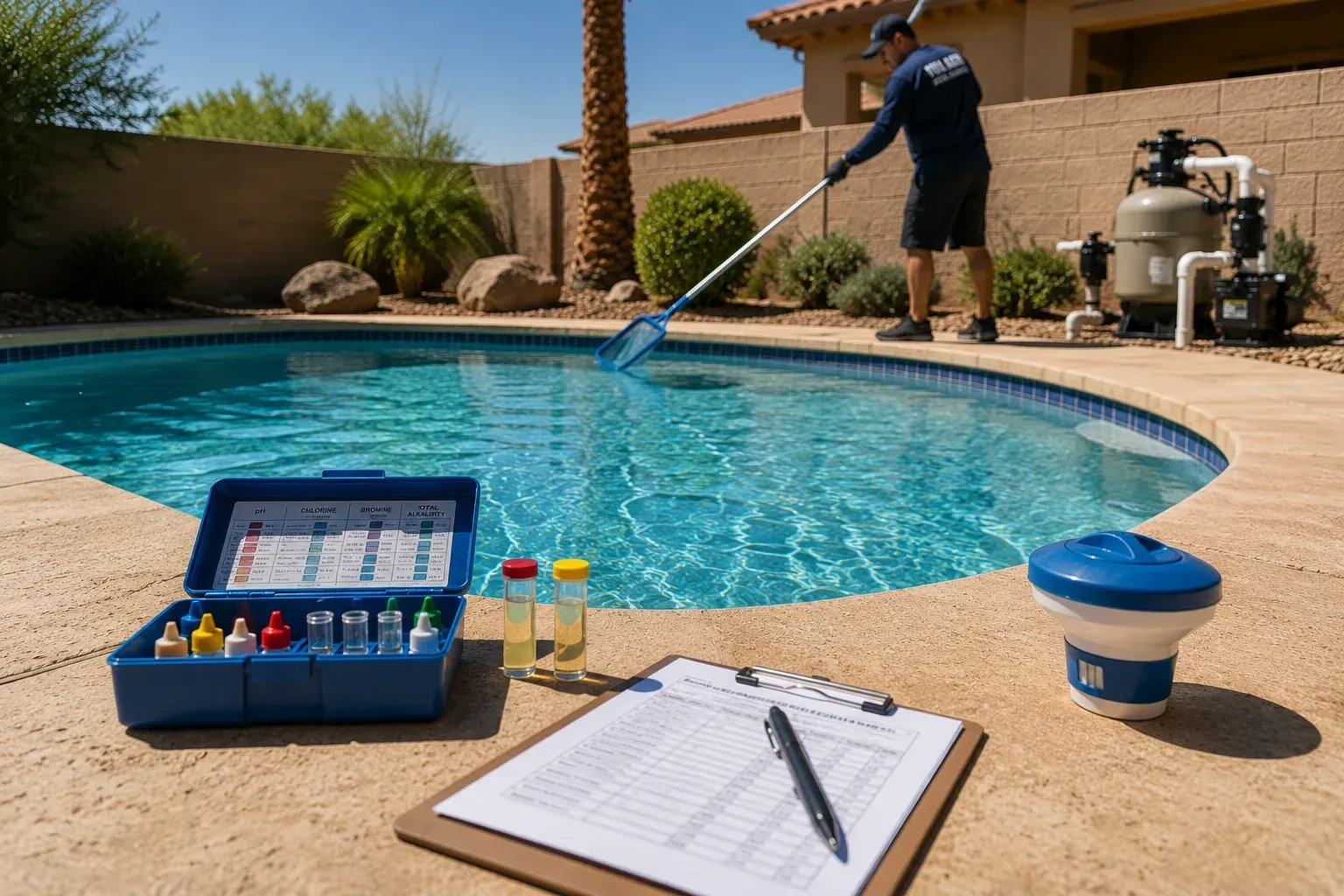
Testing is the part of summer pool care that matters most, because everything else depends on it. In Yuma's summer conditions, aim to test two to three times per week and keep the water in these general ranges:
- Free chlorine: 1 to 3 parts per million
- pH: 7.2 to 7.6
- Total alkalinity: 80 to 120 parts per million
- Cyanuric acid (stabilizer): 30 to 50 parts per million
- Calcium hardness: 200 to 400 parts per million
Two Yuma-specific notes. First, stabilizer matters more here than in most places because it shields chlorine from intense sunlight. Too little and chlorine vanishes by noon. Too much, which happens when tablets are the only chlorine source, and the chlorine stops working efficiently even when tests show it is present.
Second, because evaporation concentrates minerals, calcium hardness tends to climb through the summer. If it keeps rising, partial draining and refilling may eventually be needed. That is a judgment call best made with a full water analysis rather than a guess.
Filtration: How Long Should the Pump Run in Summer?
A common rule of thumb is that all the water in the pool should pass through the filter at least once per day, which is called one turnover. In mild weather, 6 to 8 hours of run time often covers it. In a Yuma summer, most pools do better with 8 to 12 hours per day.
Longer run times help in two ways. The filter has more time to pull out dust and fine debris, and moving water distributes chemicals evenly and resists algae growth. Running the pump during daylight hours also helps, since that is when the sun is attacking your chlorine hardest.
Watch the filter pressure gauge through the summer. A reading 8 to 10 psi above the clean starting pressure usually means the filter needs backwashing or cleaning. Struggling equipment is also worth catching early, and this guide on pool pump lifespan covers the warning signs that a pump is nearing the end of its useful life.
How Heavy Use Changes Your Cleaning Needs
Every swimmer adds sunscreen, body oils, sweat, and sometimes dirt to the water. A pool that hosts a weekend party can see its chlorine demand spike overnight, even though nothing looks different on the surface.
After heavy use, it helps to test the water that evening or the next morning, run the filter longer than usual, and skim any new debris. Many owners also shock the pool after large gatherings, meaning a temporary high dose of chlorine to burn off contaminants. Whether that is necessary depends on the test results, not the calendar.
Households with kids swimming daily should treat the pool like a high-traffic pool and lean toward the more frequent end of every range in this guide.
Monsoon Season and Dust Storms: Plan for Extra Cleanings
From roughly late June through September, monsoon storms and haboobs (large dust storms) roll through Yuma County. A single storm can drop a visible layer of dust, sand, and organic debris into a pool that was spotless the day before.
After a storm, the practical order of operations is: skim the surface first, let heavy debris settle, vacuum the floor, brush the walls, empty all baskets, clean or backwash the filter, and then test and rebalance the chemistry. Waiting more than a day or two lets that debris start feeding algae in 90-degree water.
This is why rigid schedules only go so far in summer. The desert does not follow a calendar, and neither should your cleaning plan.
Signs Your Current Schedule Is Not Keeping Up
A few signals suggest the pool needs more frequent attention than it is getting:
- Water looks dull, hazy, or slightly green, even briefly
- Walls or steps feel slippery when touched
- Chlorine readings keep coming back at or near zero
- The filter pressure rises quickly after each cleaning
- A strong "chlorine smell," which usually indicates chloramines, a sign the water needs more sanitizing, not less
None of these mean the pool is ruined. They mean the combination of heat, use, and debris is currently outpacing the routine, and the schedule should tighten until the water stabilizes.
Conclusion
In Yuma's summer, pool cleaning is a weekly job at minimum, backed by daily skimming, testing two to three times per week, and longer filter run times of 8 to 12 hours per day. Extreme heat accelerates chlorine loss, evaporation concentrates minerals, dust storms add sudden debris loads, and heavy swimming raises the demand on everything.
The right frequency for any individual pool depends on its size, equipment, surroundings, and how often people swim. Testing the water regularly is the most reliable way to know whether your routine is working, because the numbers reveal problems before your eyes can. Homeowners who understand these factors can decide for themselves what to handle personally and where outside help makes sense.
Tired of Fighting Cloudy Water All Summer?
Keeping up with a Yuma pool in July is a real commitment, and not every homeowner has the time for it. If you would like a clearer picture of what your specific pool needs this summer, or you simply want questions answered before deciding anything, feel free to
contact us or call (928) 318-6640. There is no pressure and no obligation, just straightforward guidance so you can make an informed decision about your pool care.
Frequently Asked Questions
How often should pools be cleaned during summer in Yuma?
At least once per week for a full cleaning, with skimming every one to two days and water testing two to three times per week. Storms, dust, and heavy use can require additional cleanings.
Can I clean my pool less often if I have an automatic pool cleaner?
An automatic cleaner reduces vacuuming work, but it does not test water, balance chemicals, brush walls, or clean filters. Those tasks still need to happen on a regular schedule.
How long should my pool pump run each day in the summer?
Most Yuma pools do well with 8 to 12 hours per day in summer, enough for at least one full water turnover. Exact needs depend on pool size, pump output, and how much debris the pool collects.
Why does my pool turn green so fast in the summer?
Warm water, intense sunlight, and dust create ideal algae conditions. When chlorine drops, algae can bloom within a day or two. Frequent testing and consistent sanitizer levels are the main defense.
Do I need to clean my pool after every dust storm?
It is a good idea. Dust and debris left in the water clog filters and feed algae. Skimming, vacuuming, and checking the filter within a day or two of a storm helps prevent bigger problems.
Should I drain my pool in the summer because of high calcium?
Not necessarily, and draining in extreme heat carries risks for some pool surfaces. A water test showing very high calcium hardness or dissolved solids is the starting point, and partial drains are often done in cooler months when possible.
Is weekly professional cleaning enough, or do I still have to do things myself?
Weekly professional service covers the major tasks, but light skimming between visits and keeping an eye on the water level still help, especially during monsoon season when conditions change quickly.